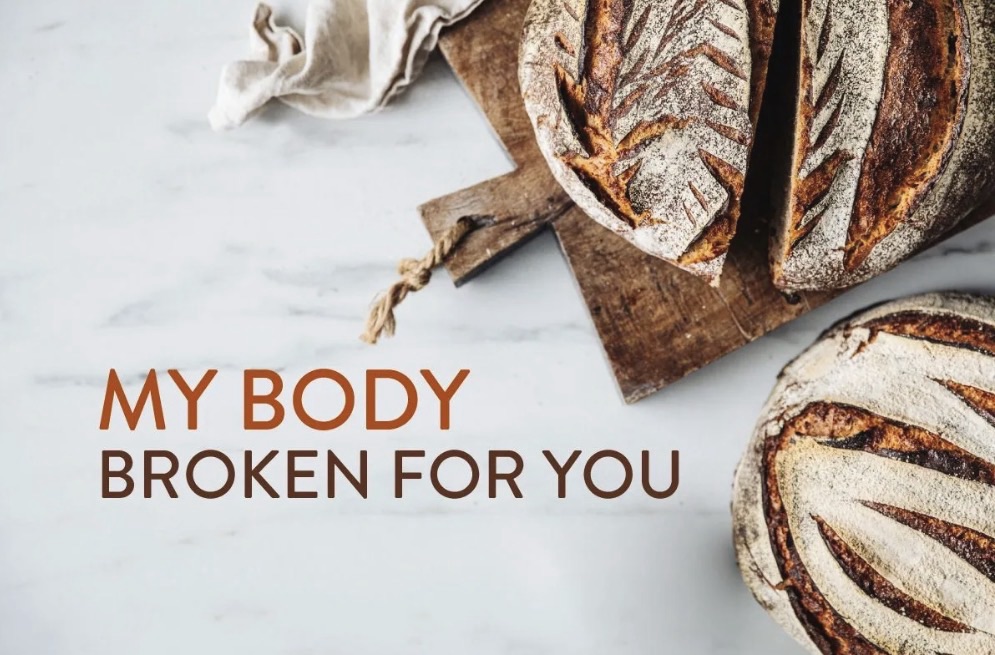
“and when he had given thanks, he broke it, and said, “This is my body, which is for you. Do this in remembrance of me.” In the same way also he took the cup, after supper, saying, “This cup is the new covenant in my blood. Do this, as often as you drink it, in remembrance of me.” For as often as you eat this bread and drink the cup, you proclaim the Lord’s death until he comes.” 1 Corinthians 11:24-26 ESV
In this age where culture wars rage over every facet of human life, it’s crucial to recognize that all human conflict is ultimately theological. The issue of abortion isn’t just political, it’s deeply spiritual, and behind the rhetoric of “rights” and “choices” lurks a much darker reality—a reality that began long before Roe v. Wade, before any government or court weighed in on the question of human life. The battle over life itself is rooted in the ancient rebellion against God, a cosmic conflict between good and evil, truth and lies. Abortion, at its core, is the sacrament of Satan—a blasphemous parody of the Communion instituted by Christ. It declares the opposite message: “This is my body,” but with a meaning rooted in death and destruction.
The Heart of the Battle: Satan’s War Against God
Satan, in his rebellion, seeks to wound the heart of the Father. He knows he cannot kill God, but he can attack what God loves the most—His creation, and particularly the pinnacle of that creation: human beings, made in His image. Babies represent innocence and new life, the very essence of God’s creative power. For Satan, there is no better way to strike at the heart of God than by attacking this most vulnerable of lives. Abortion, in this sense, is not merely a political issue; it is a spiritual one, a direct assault on God’s image and His design for life.
In John 10:10, Jesus says, “The thief comes only to steal and kill and destroy; I have come that they may have life, and have it to the full.” Satan’s mission is to destroy life, to rob the world of God’s blessings, and abortion is his chosen method. Satan, unable to kill God Himself, targets the most defenseless, those who cannot protect themselves: unborn children. This grievous attack wounds the heart of the Father and causes immense chaos on the earth, sowing seeds of despair, confusion, and brokenness.
Abortion: The Demonic Parody of the Last Supper
The Catholic philosopher Peter Kreeft once said that abortion is the “demonic parody of the Eucharist.” This insight is profound. The Eucharist, a term often seen in Catholicism for communion, it is the sacred sacrament wherein believers partake in the body and blood of Christ, remembering His sacrifice on the cross. Jesus’ words, “This is my body, broken for you,” reflect the ultimate act of selflessness, the laying down of His life so that others might live.
In stark contrast, the central mantra of the abortion industry and its proponents is eerily similar but with a twisted meaning: “This is my body.” This phrase, once uttered by our Savior as a declaration of sacrificial love, has been co-opted by the culture of death to mean something entirely different. In the context of abortion, “This is my body” is not a statement of love and sacrifice, but one of autonomy and self-preservation. It says, “I have the right to do what I want with my body, even if it means ending the life of another.”
This demonic parody is no coincidence. Abortion mimics the language of the Last Supper because, at its core, it is an inversion of the sacrament. Where Christ gives His body so that others may live, abortion demands that the unborn must die so that the mother might live as she wishes. It is the ultimate perversion of the Gospel, where sacrifice is twisted into selfishness, and life is traded for death.
The Language of the Culture of Death
The culture of death has adopted the language of healthcare to cloak its true intentions. Abortion is referred to as “reproductive healthcare,” as if the act of ending a pregnancy is somehow contributing to the health of the mother. Similarly, transgender surgeries, which involve the mutilation of perfectly healthy bodies, are called “gender-affirming care.” In both cases, the language is designed to deceive, to make these acts of destruction appear compassionate and caring. But in reality, they are anything but.
Planned Parenthood, the largest abortion provider in the world, is also one of the leading providers of transgender hormones and surgeries. The same organization that profits from the destruction of unborn lives now profits from the mutilation of those outside the womb. Both practices are defended using the same argument: bodily autonomy. “This is my body,” the advocates say, “and I can do with it what I please.” Whether it’s ending the life of an unborn child or altering one’s body beyond recognition, the argument remains the same: the individual has ultimate authority over their own body, regardless of the consequences for others or for themselves.
But this is not the way of Christ. Jesus does not say, “This is my body, I will do with it as I please.” Instead, He says, “This is my body, broken for you.” In Christ’s economy, the body is a gift to be given, not a tool for asserting one’s own will. Christ’s sacrifice is the ultimate model of love, where selflessness replaces selfishness, and life triumphs over death.
The Theology of Abortion: A Rebellion Against God’s Sovereignty
At its core, abortion is not just about “choice” or “rights.” It is about rebellion against God’s sovereignty over life. In Genesis 3, the serpent tempts Eve with the promise that “you will be like God.” This temptation is at the heart of every sin, the desire to be in control, to determine for oneself what is right and wrong, to be one’s own god. Abortion is the ultimate expression of this rebellion, as it involves the deliberate decision to end a life that God Himself has created.
When a woman chooses to abort her child, she is, in essence, saying that she has the right to determine who lives and who dies. This is a power that belongs to God alone, and yet, through abortion, human beings seek to usurp this divine authority. It is no wonder that the language of bodily autonomy is so central to the abortion debate, for it reflects the original sin of the Garden of Eden: the desire to be like God.
Christ’s Victory Over Death
But in the midst of this dark reality, there is hope. For while Satan may wage war against life, he has already been defeated. Jesus Christ entered into human history, not as a fully grown man or as a warrior king, but as a baby in a womb. He chose to humble Himself, to take on flesh in the very place where life begins. By doing so, He sanctified the womb, declaring it to be a place of life, not death.
The Incarnation itself is a powerful statement against abortion. In becoming human, Christ affirmed the value and dignity of every human life, from the moment of conception to natural death. He did not come to be served but to serve, and to give His life as a ransom for many (Mark 10:45). His death on the cross was the ultimate act of love, the perfect sacrifice that defeated sin and death once and for all.
And so, while abortion may be the sacrament of Satan, it cannot stand against the power of the cross. Christ’s sacrifice is greater than any sin, and His victory over death is final. As believers, we are called to stand for life, to defend the unborn, and to proclaim the truth of the Gospel in a world that so desperately needs it.
The Church’s Role in the Battle for Life
The Church cannot remain silent in the face of such evil. We must recognize that abortion is not just a political issue; it is a spiritual one. The battle for life is a battle for the souls of men and women, and it is a battle that the Church must engage in with the full armor of God.
Ephesians 6:12 reminds us that “our struggle is not against flesh and blood, but against the rulers, against the authorities, against the powers of this dark world and against the spiritual forces of evil in the heavenly realms.” Abortion is one of the most insidious of these evils, for it not only takes innocent lives but also blinds the hearts and minds of those who promote and defend it.
As the Church, we are called to be the hands and feet of Christ in this world. We must care for women in crisis pregnancies, offering them support and love, not judgment. We must speak the truth about abortion, but we must do so in love, with the goal of leading others to repentance and healing. And we must never forget that, no matter how dark the world may seem, Christ’s light shines brighter still.
The Power of the Gospel
In the end, the battle over abortion is a battle between two opposing worldviews: one that says, “This is my body, and I will do with it what I please,” and one that says, “This is my body, broken for you.” The former leads to death, the latter to life. The former is rooted in the lie of the serpent, the latter in the truth of the Gospel.
We must choose life. We must stand for the truth that every human being is made in the image of God and has inherent value and dignity. We must proclaim the Gospel of Jesus Christ, the only message that has the power to heal the wounds caused by abortion and to bring life where there is death. And we must never forget that, no matter how fierce the battle may be, Christ has already won the victory.
 Dr. Jonathan Crawford Blog
Leave a comment